Jesus Names Christmas Tree Religious SVG T-Shirt Designs
First Impression: Warm, Reverent, and Seasonally Grounded
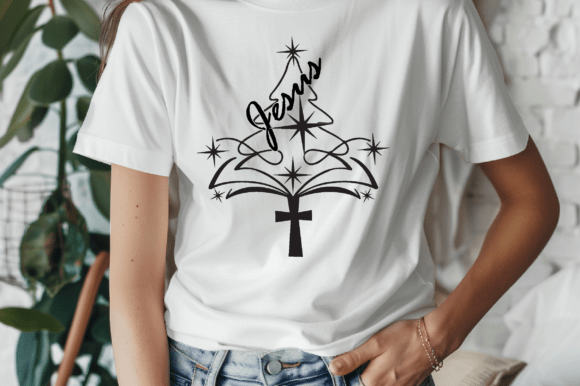
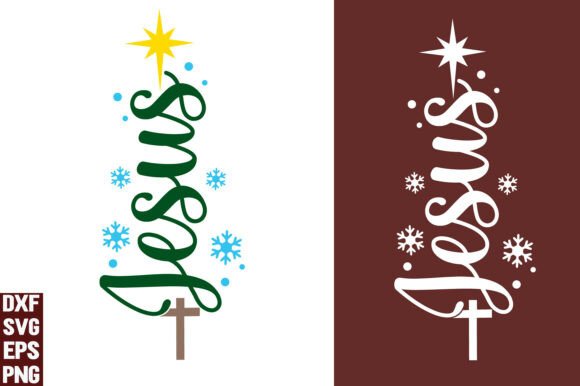
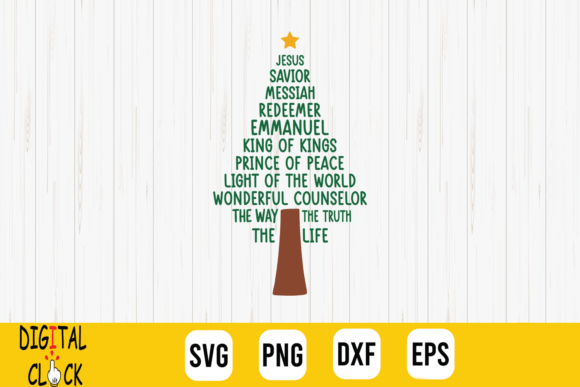
Opening the Jesus Names Christmas Tree Religious SVG file felt like unboxing a well-curated holiday sketchbook—immediately evoking quiet reverence rather than festive clutter. The composition centers on a stylized evergreen with delicate branches forming subtle silhouettes of biblical names: “Emmanuel,” “Savior,” “Prince of Peace.” It’s not literal lettering wrapped around a tree; it’s integrated illustration—where faith and form coexist without visual competition. This isn’t clipart masquerading as meaning—it reads as intentional creative design, grounded in both typographic sensitivity and symbolic clarity. For a client launching a handmade business centered on faith-based gifting—think an Etsy shop selling linen prayer wraps or ceramic mugs for Advent—it instantly sets the right emotional tone: sincere, unhurried, and quietly confident.
Where It Shines: Contexts That Elevate Its Strength
The Jesus Names Christmas Tree Religious SVG excels where narrative warmth matters more than stark minimalism. As a graphic design asset, it performs exceptionally well in product mockups for t-shirts, tote bags, and sublimation designs—especially when paired with natural textures (kraft paper labels, oatmeal cotton, unbleached canvas). In packaging design, it anchors holiday gift boxes with gentle authority: no shouting, just presence. As part of a design bundle for a local church’s Christmas bazaar, it becomes a unifying thread across posters, digital invites, and printable wall art—its consistent line weight and balanced negative space ensure cohesion across formats.
For social media graphics, it scales beautifully into Instagram carousels and Pinterest pins—particularly when layered over soft gradient backgrounds or muted botanical overlays. As a Cricut project element, its clean vector paths cut precisely on vinyl or iron-on transfers, and its open counters hold up even at 4” tall on youth-sized tees. In editorial design for a faith-based blog or small-run print zine, it functions elegantly as a section divider or chapter header—never overwhelming text, always reinforcing theme.
Where Caution Is Warranted: Practical Design Boundaries
This isn’t a universal-fit SVG design. Its hand-drawn delicacy doesn’t survive compression into tiny favicon sizes or dense product label layouts. On busy backgrounds—like patterned wrapping paper mockups or photo-heavy Instagram stories—the subtlety can dissolve. It also resists pairing with ultra-minimalist branding systems: if your client’s identity relies on razor-thin sans serifs and monochrome palettes, this asset introduces warmth that may clash with established visual hierarchy. Likewise, avoid embedding it directly into formal logo design or corporate holiday reports—its devotional focus narrows audience resonance. And while it works beautifully with script fonts and gentle serif pairings (think Playfair Display or Cormorant Garamond), it visually competes with bold display fonts or aggressive handwritten styles.
Designer Notes: What I Tested Before Approving for Client Use
- Contrast check: Verified legibility on both light cream and deep navy apparel mockups—no stroke adjustments needed.
- Black-and-white test: Printed cleanly at 2” and 10”—no detail loss, no unintended fusion of name silhouettes.
- File inspection: Confirmed true vector scalability in Illustrator; no raster dependencies. PNG variant includes crisp alpha transparency—ideal for Canva templates and web banners.
- Font compatibility: Paired successfully with Montserrat (clean contrast), Cinzel (liturgical gravitas), and Pacifico (handmade softness)—but avoided pairing with condensed grotesques like Neue Haas Grotesk.
- Licensing review: Confirmed commercial license covers POD platforms, Etsy listings, and physical product resale—critical for clients selling through Redbubble or Printful.
Impact on Brand Consistency and Audience Trust
Using the Jesus Names Christmas Tree Religious SVG isn’t just about decoration—it’s a strategic alignment signal. For small business branding rooted in Christian values, deploying this asset consistently across marketing visuals, email headers, and packaging tells customers: *This isn’t seasonal trend-chasing. This is conviction made visible.* That builds visual trust. Unlike generic snowflakes or glittery “Merry Christmas” vectors, this asset carries inherent meaning—so when placed on a mug sold by a women’s ministry or embroidered on a baby blanket from a faith-based boutique, it deepens emotional appeal without explanation. It also supports audience engagement: followers recognize the recurring motif across platforms, reinforcing brand memory. Yet it avoids cliché—no halos, no overt crosses—making it accessible to broader conservative Christian audiences without alienating those preferring understated expression.
Final Verdict: A Thoughtful Addition to Your Creative Marketplace Toolkit
This isn’t flashy. It won’t win awards for avant-garde experimentation. But as a commercial design asset built for real-world use—especially within the handmade business and print-on-demand ecosystems—it delivers rare consistency: spiritually resonant, technically sound, and commercially viable. When your client needs a t-shirt design that feels personal—not promotional—this religious SVG becomes a quiet anchor. When you’re curating a digital product collection for crafters or building a Canva template suite for church communicators, it adds depth without complexity. And because it honors both craftsmanship and conviction, it helps elevate the entire category of faith-based creative design beyond tokenism. Just remember: test it early, pair it intentionally, and always verify licensing before scaling across client channels.